

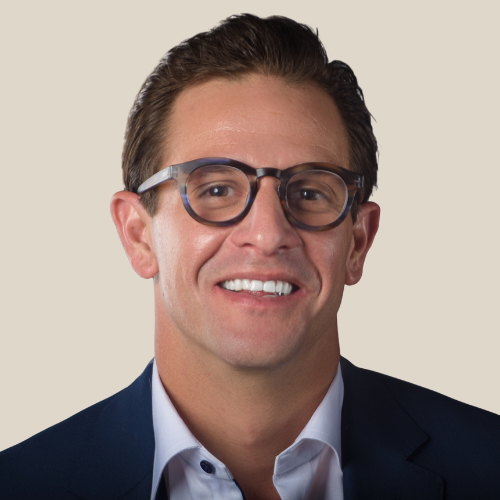
Christopher M. Lazzara builds and leads durable organizations at the intersection of investment, healthcare education, university governance, and philanthropic innovation. As Founder and CEO of MountainStar Partners since 2013, he directs investment strategy and oversees a portfolio spanning real estate development, direct lending, and healthcare infrastructure.
In 2014 he co-founded the Georgia School of Orthodontics with his father, Dr. Gasper Lazzara. As President and permanent member of the Executive Committee, he chairs the Finance and Facilities Committees and has helped establish a 36-month residency program that has delivered care to more than 14,600 patients while advancing specialty orthodontic education in Georgia.
Following the 2024 diagnosis of his daughter Isabella with beta-propeller protein-associated neurodegeneration (BPAN/WDR45), he founded the Isa Elaine Foundation to accelerate translational research, clinical infrastructure, family support, and policy advocacy for ultra-rare pediatric neurodegenerative disorders. The Foundation maintains active partnerships with the Stanford School of Medicine, UF Health (Norman Fixel Institute for Neurological Diseases), the NBIA Disorders Association, and broader childhood dementia networks to advance mechanistic insights linking BPAN and iron deposition diseases to common neurodegenerative conditions such as Alzheimer’s and Parkinson’s disease. All overhead costs are covered privately so that 100% of external contributions directly support research and patient-family impact.
He serves as a state-appointed Trustee of the University of North Florida, contributing to strategic oversight of one of Florida’s fastest-growing public research universities. He currently serves as board member for the Cultural Council of Greater Jacksonville. Mr. Lazzara was also named as a “40 Under 40” honoree by the Jacksonville Business Journal. Across these roles, Mr. Lazzara focuses on scalable institutional models that integrate private-sector discipline with public-purpose impact in education, healthcare access, veterans’ support, civil rights and rare-disease research.